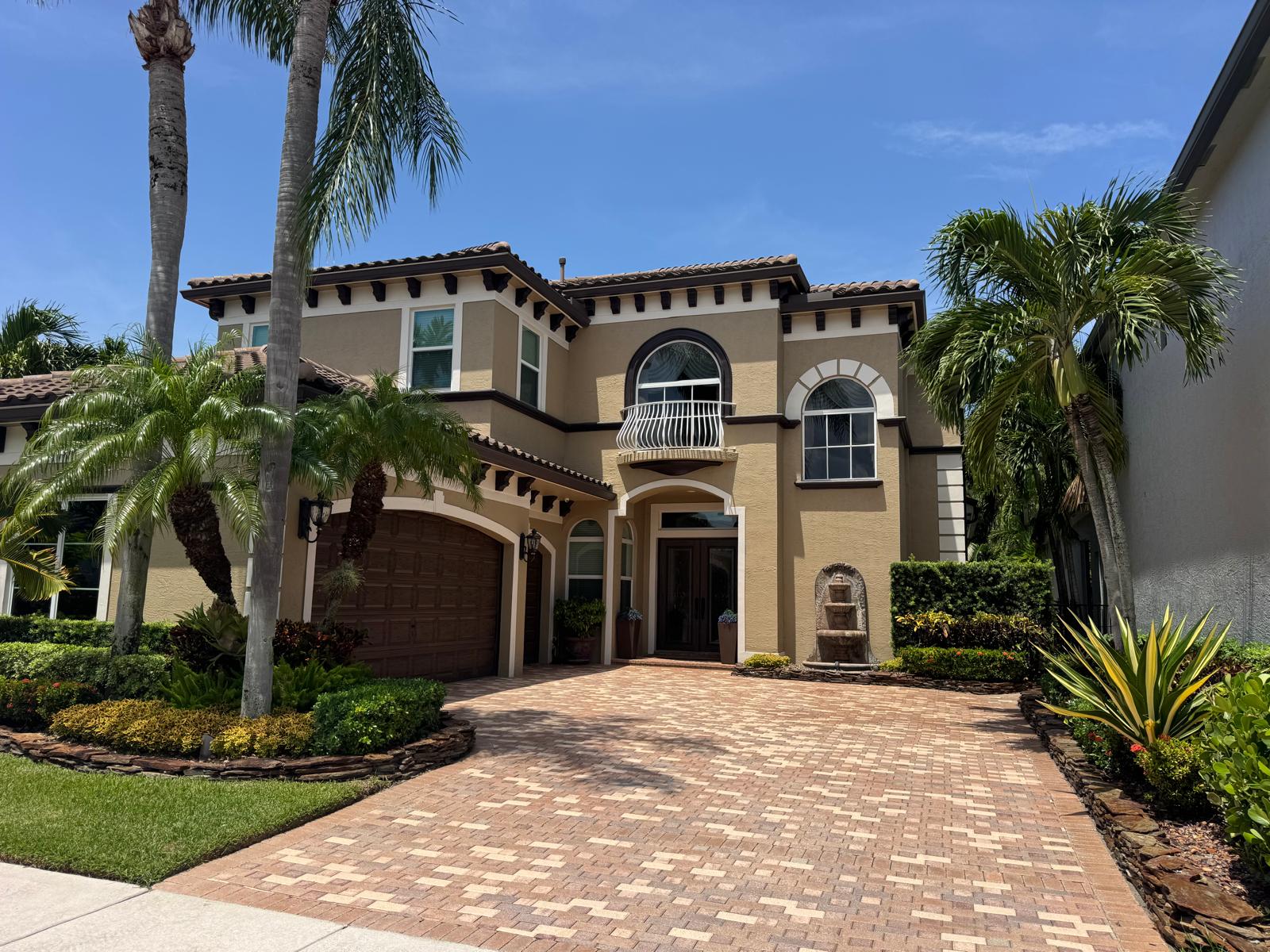
You repainted your home a few years back, it looked sharp, and then the South Florida sun and summer storms went to work on it. If you have ever asked how often to paint house exterior walls in this climate, you are asking exactly the right question. So how long does exterior paint last when heat, humidity, UV, and salt air hit your walls every single day? Less time than the paint can label promises, but a lot longer than you might fear once the work is done right. This post walks through the real numbers, what actually wears paint down here, and how smart exterior house painting choices keep you off the repaint treadmill for good.
If you plan to stay in your Coral Springs, Fort Lauderdale, or West Palm Beach home for the long haul, that last part matters most. Nobody wants to write a four figure check, watch the color start to chalk in two summers, and wonder if they got taken. You deserve a straight answer, not a sales pitch.

How Long Does Exterior Paint Last in South Florida?
Here is the number most contractors will not lead with. In mild parts of the country, a quality exterior paint job lasts 7 to 10 years. In Florida, that window shrinks. Most homes here need repainting every 5 to 7 years, and homes near the coast often see 4 to 6 years because salt spray speeds up wear.
Your siding material changes the math too. Stucco, which covers a huge share of South Florida homes, tends to hold paint for 5 to 12 years because it grips coatings well. Brick can go even longer. Wood siding and trim are the weak point and may need attention every few years, since wood swells and shrinks with moisture.
So when you ask how long does exterior paint last on your specific home, the honest reply is that it depends on three things you can control: the surface, the products, and the prep. The climate you cannot change, but those three factors are where a good crew earns its keep.
Why Florida Weather Is So Hard on Paint
It helps to know what you are up against, because the fixes follow directly from the causes. Four forces do the damage.
First, the sun. Florida gets intense UV year-round, and UV breaks down the binders that hold paint together. That shows up as fading and a powdery, chalky surface. South-facing walls and dark colors take the worst of it, which is why a deep navy can fade years before a soft beige on the same house.
Second, humidity. When moisture stays trapped behind a coating, it pushes outward as the wall heats up. That pressure forms blisters that pop and peel. High humidity also slows fresh paint from curing, so a rushed job in the wrong conditions starts failing early.
Third, salt air. Near the coast, salt mixes with moisture, accelerating fading and chalking, especially on exposed walls.
Fourth, the daily heat-and-storm cycle. Hot afternoons followed by cool, damp nights make stucco and wood expand and contract. Paint stretches with them until it cracks. Wind-driven rain from summer storms then works into any opening it finds.
None of this means your home is doomed. It means Florida paint has a tougher job, and the work has to account for that.
The Real Reason Paint Fails Early
Most homeowners assume that buying the most expensive bucket of paint is what makes a job last. That is the comfortable story, and it is mostly wrong.
The single biggest factor in paint lifespan is what happens before the first coat goes on. According to Sherwin-Williams surface preparation standards, up to 80 percent of all coating failures trace back to inadequate prep that hurts adhesion. Four out of five early failures are a prep problem, not a paint problem.
In practice, prep means washing off dirt, mildew, and loose paint so the new coat can grip. It means letting damp surfaces dry fully before painting, which is no small thing in a humid climate. It means repairing or replacing rotted trim, fascia, and siding before a brush ever touches them, and sealing porous stucco with the right primer. Skip these steps and even the priciest paint peels on schedule.
That is the part a careful contractor controls and a rushed one skips. The cheapest bid often wins by cutting the exact prep work that decides whether you repaint in eight years or three.
How Often to Paint House Exterior Surfaces in Florida
Knowing how often to paint house exterior surfaces is less about the calendar and more about reading your walls. Your home tells you when it is getting close.
Watch for a few signals, and treat them as information rather than alarm.
Catching these early is what separates a planned repaint from an expensive surprise. Once water gets behind the paint, you are no longer talking about a color update. You are talking about wood rot, mold, and repair bills that dwarf the cost of painting. Repainting on a sensible schedule is simply cheaper than fixing the damage neglect causes.
What a Longer Lasting Paint Job Actually Looks Like
So what does it take to get the full life out of a Florida paint job, and stay there? The plan is not complicated, but every step has to be done in order.
It starts with an honest inspection of your siding, trim, and caulking. From there, a strong job follows a clear path: pressure wash the surface, repair any rotted wood, prime bare and porous areas, then apply coatings built for heat, humidity, and UV. Stucco and brick get breathable coatings so moisture can escape instead of building up behind the film. Wood gets sealed and protected at its most vulnerable edges. Color choice factors in too, since lighter shades hold up longer under our sun.
This is where working with an experienced local crew pays off. Hartzell Painting has painted homes across Coral Springs, Fort Lauderdale, West Palm Beach, and the surrounding suburbs for decades. The team is licensed, bonded, and insured, holds an EPA Lead-Safe certification, carries a BBB A+ rating, and belongs to the Painting Contractors Association. Those are checkable credentials, not slogans, and the work is backed by multi year warranties in writing.
Good exterior house painting is not about the flashiest color or the lowest price. It is about a process that respects what Florida throws at your walls, so your investment holds long after the crew drives away.