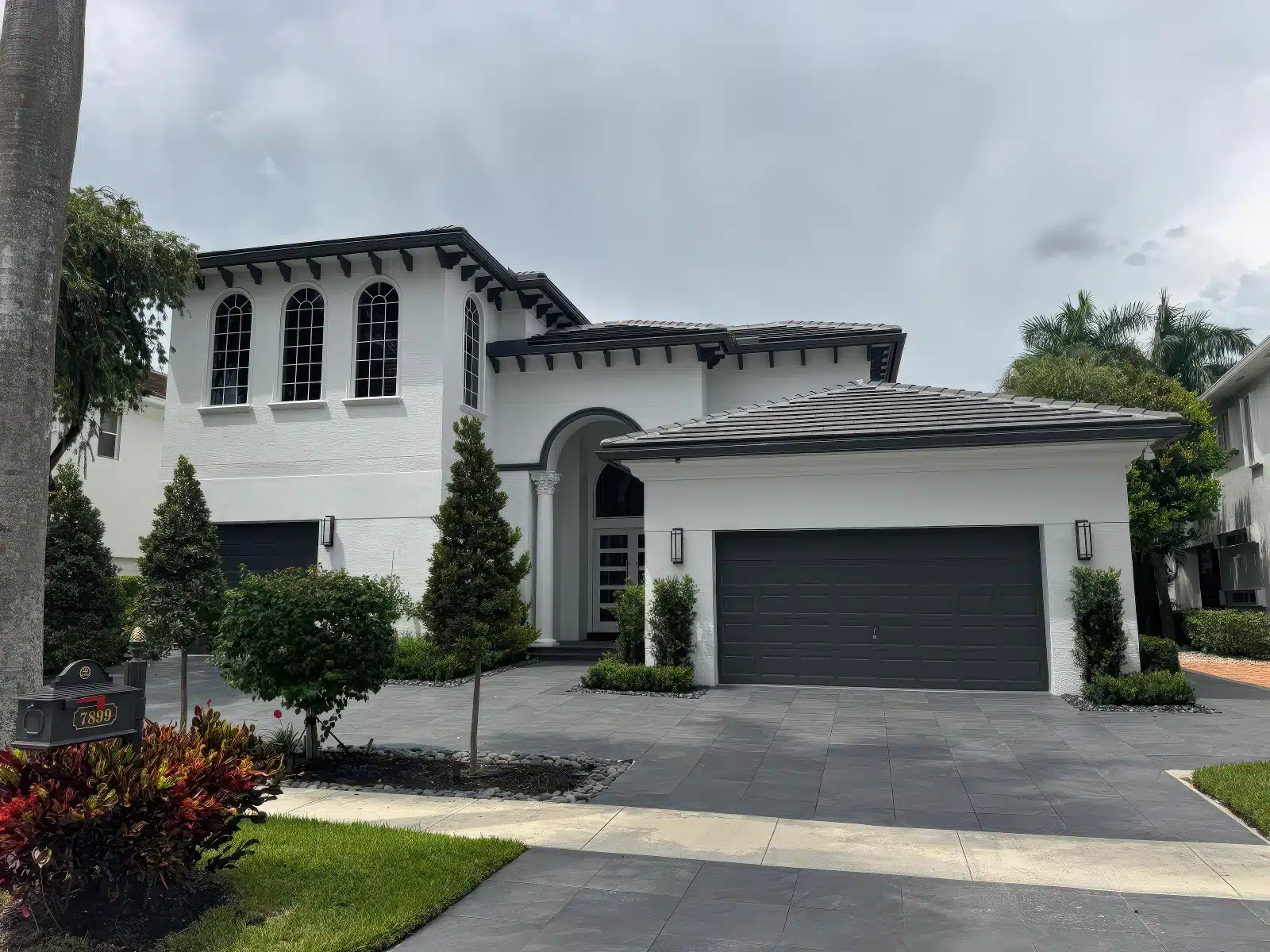
If you’ve compared flat vs satin exterior paint online and still are not sure what to pick, you’re not alone. Choosing the right exterior paint sheen for a stucco home near the coast is not the same call as picking one for a house inland. Get it wrong, and a fresh paint job can turn into a mildew magnet within a year. I’m Ed Holman, owner of Hartzell Painting. My crews have handled flawless exterior painting across Southeast Florida since 1948. One question comes up on almost every estimate: what sheen actually holds up out here?
This breakdown covers what flat, satin, and gloss sheens do on stucco, siding, and trim in a humid, salty climate. Read through it, and you can make the call with a clear head instead of guessing at the paint counter.

What Exterior Paint Sheen Actually Means
Sheen is a measurement of how much light a paint film reflects once it’s dry. A flat finish reflects almost no light. A gloss finish reflects a lot, and everything in between falls somewhere on that scale. That difference is not just cosmetic. Sheen level is tied to how much resin sits in the paint formula, and resin is what makes a paint film hard, flexible, and washable.
Sherwin-Williams lays out the difference plainly on its own site. Flat and matte finishes are meant for surfaces where hiding imperfections matters more than washability. Satin holds up in areas prone to nicks, scuffs, and moisture. Gloss is saved for surfaces that need a durable, wipeable finish. That advice was written with interior rooms in mind, but the same physics apply outside. The stakes are just higher. A living room wall does not deal with driving rain or salt-laden humidity. A stucco exterior in Coral Springs does, every single day.
Flat and Matte Sheen: Where It Works and Where It Struggles
Flat paint has almost no shine. That low reflectance does a nice job of hiding rough stucco texture, hairline patch marks, and uneven surfaces. Homeowners often like flat sheen because it gives walls a soft, uniform look with no glare in direct sun. The tradeoff shows up over time. Flat paint has a more porous surface than higher sheens, and that means it holds onto dirt, pollen, and moisture more easily.
In a humid coastal climate, that porous surface is a problem. Trade publication JLC notes that flat paints tend to pick up dirt and absorb water more readily than high-gloss paints. Mildew growth is often greater as a result. That does not rule flat paint out for a Coral Springs home, but it does mean the surface needs more attention afterward. Homeowners who choose flat for their main walls should plan on a yearly rinse to keep dirt and mildew from building up.
Satin Sheen: The Middle Ground Most Florida Homes Land On
Satin sits between flat and gloss. It has a soft, low luster that still reads as a matte-ish finish from a normal viewing distance. It is the sheen most South Florida homeowners settle on for main walls, and there is a practical reason for that. Satin carries more resin than flat paint. That gives it better wash resistance without the high shine that shows every wave and imperfection in stucco.
A home exposed to humidity, pollen, and the occasional salt breeze needs a wall that can actually get clean. Satin gives you a finish a garden hose or a light pressure wash can handle. It also holds color better against sun exposure than flat paint tends to. This is the sheen we recommend most often for full-house exterior repaints in Southeast Florida, unless a client has a specific reason to go another direction.
Gloss and Semi-Gloss: Built for Trim, Doors, and Accents
Gloss and semi-gloss sit at the top of the reflectance scale. That shine comes from a paint film that is denser and harder once it cures. This is exactly why these sheens work so well on the parts of a house that take the most physical abuse: front doors, garage doors, shutters, handrails, and trim.
Hartzell Painting’s team applies high-performance coatings on these accent areas. They need to resist fading, peeling, and damage from humidity better than a broad wall surface does. A tighter, glossier film sheds water faster and resists dirt pickup better than a flat or satin finish. That matters on a front door that gets direct sun and rain most of the year. The downside is that gloss shows surface flaws more than any other sheen, so prep work has to be close to perfect before the topcoat goes on.
Sheen Comparison for Coastal Homes
| Sheen | Best Used On | Coastal Durability | Upkeep |
|---|---|---|---|
| Flat / Matte | Stucco walls, uneven surfaces | Lower, holds dirt and moisture | Yearly rinse recommended |
| Satin | Main exterior walls, siding | Good balance of look and wash resistance | Light annual cleaning |
| Semi-Gloss / Gloss | Trim, doors, shutters, railings | High, sheds water and salt spray well | Spot cleaning as needed |
Note: This is a general reference. The right sheen for your home also depends on your paint brand, color, and existing surface condition.
Stucco, Wood, and Trim Need Different Answers
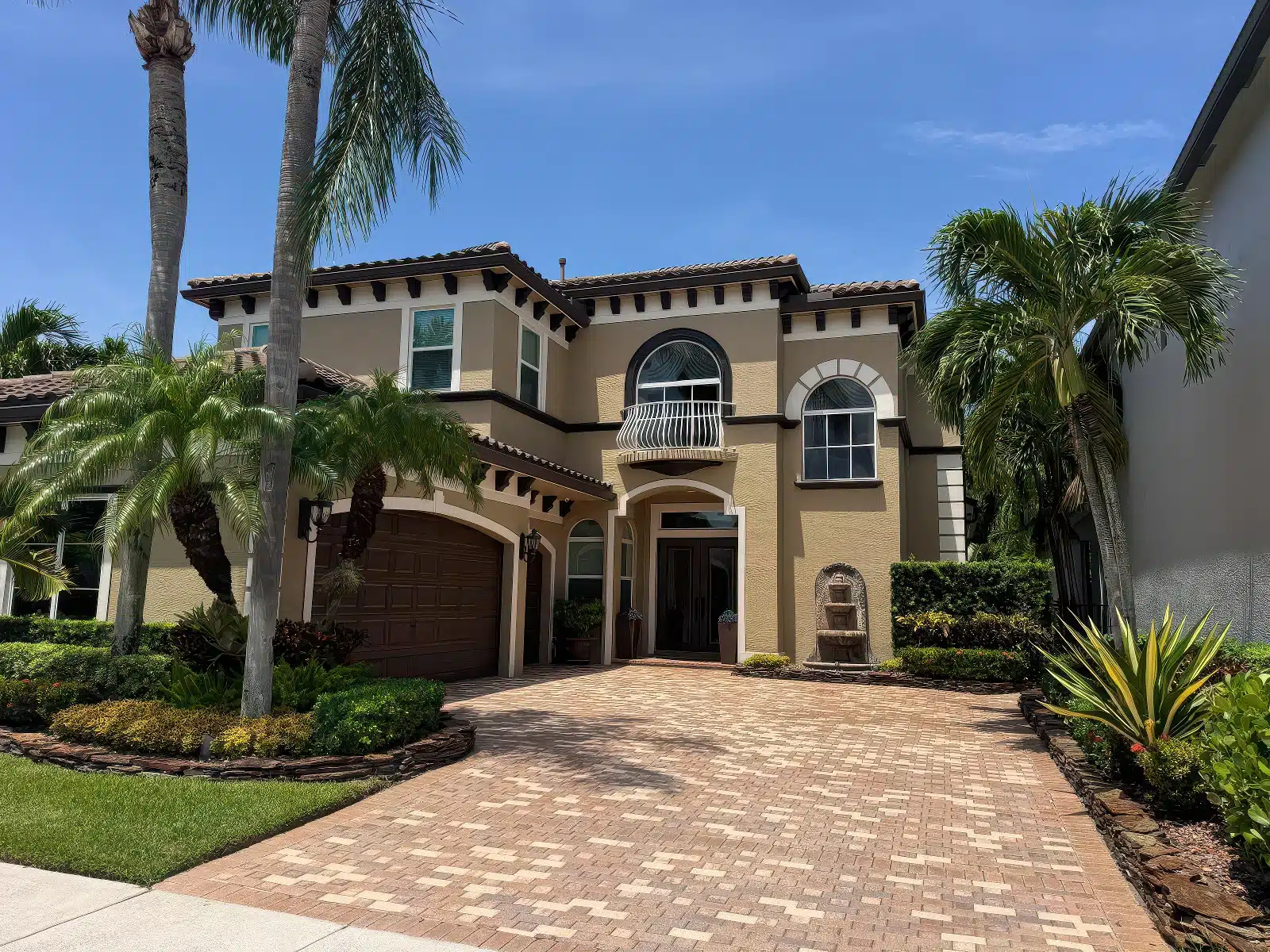
South Florida is a stucco-heavy market, and stucco behaves differently than wood siding or metal trim once paint hits it. Stucco is porous, so the coating needs to breathe while still resisting moisture. That’s why flat or satin finishes are usually the better fit for walls. Wood trim, fascia, and doors move with temperature and humidity. A higher-sheen, flexible coating helps that surface shed water instead of trapping it against the wood.
This is also where a professional eye earns its keep. Two homes on the same street can need two different sheen plans. It comes down to sun exposure, tree cover, and how close each one sits to open water. A home a few blocks from the Intracoastal deals with more salt exposure than one set back in a landlocked neighborhood, even inside the same city.
What Happens When the Wrong Sheen Gets Used
None of these outcomes mean a homeowner made a bad decision on purpose. They usually mean nobody walked the property and matched the sheen to the real conditions before the crew showed up. That mismatch is avoidable with a short conversation before the first can of paint gets opened.
How Hartzell Painting Helps You Choose the Right Sheen
We have been painting homes across Southeast Florida since 1948. That includes a long list of stucco homes in Coral Springs, Fort Lauderdale, and Boca Raton. Every estimate starts with a walk around the property, not a sales pitch. We look at sun exposure, surface condition, and how close the home sits to salt air before recommending flat, satin, or gloss for each surface.
From there, our crews handle the prep work that makes any sheen perform the way it’s supposed to. That means pressure washing, patching, caulking, and priming before a single coat of finish paint goes on. A great sheen choice on a poorly prepped wall will not hold up, and we would rather tell you that upfront than have you find out the hard way.