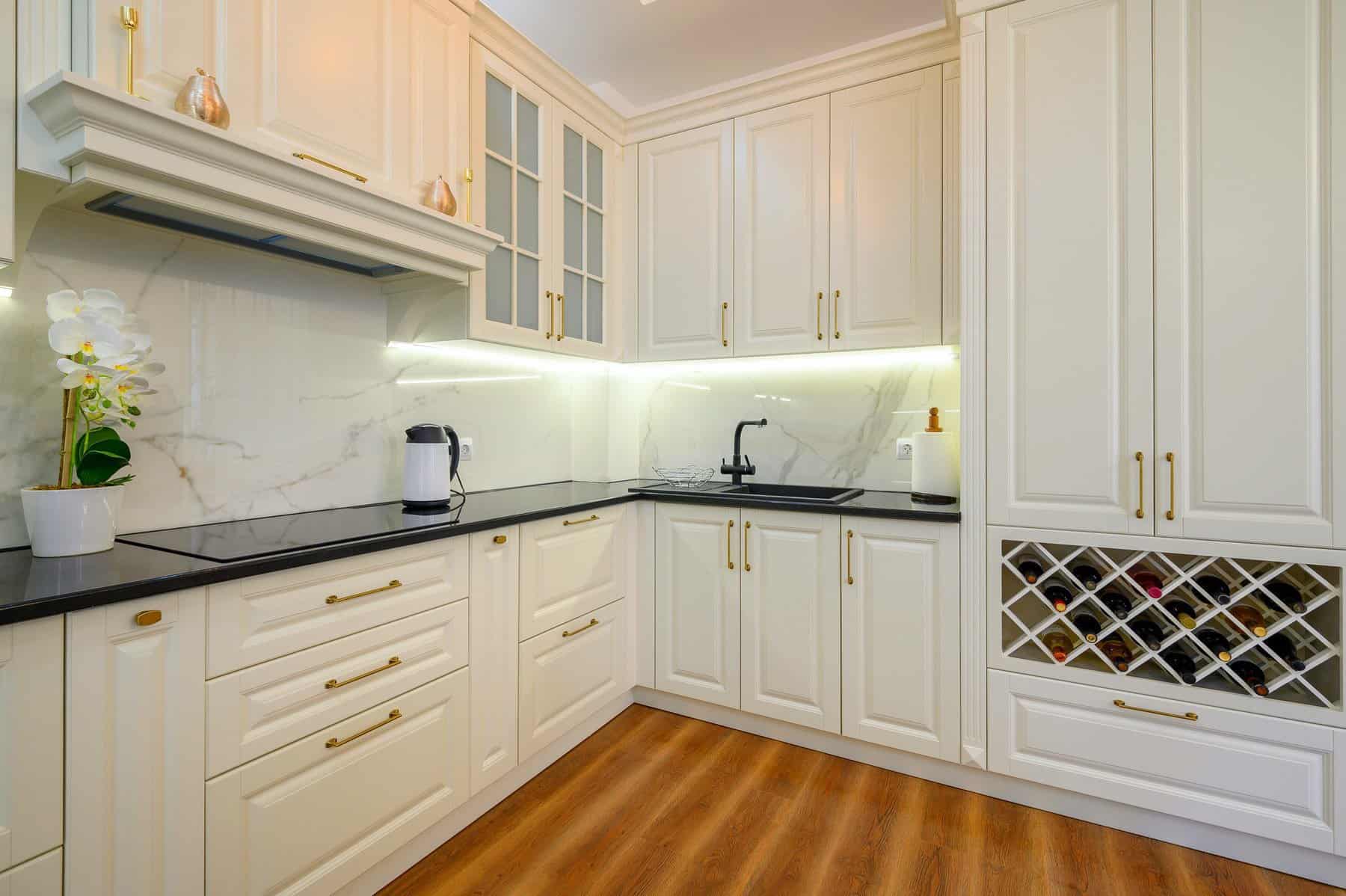
Your cabinets are the first thing people notice in your kitchen. If you are weighing satin vs semi gloss cabinets, you are already asking the right question. Pick the wrong sheen, and a fresh coat can look tired within a year. You end up wiping fingerprints off a flat door every day, or staring at a shine that shows every bump. Choosing the best paint finish for kitchen cabinets is less about taste. It is about how your kitchen actually gets used. The good news? The decision is simpler than the paint aisle makes it look.
This post puts satin and semi-gloss side by side. It shows which one holds up in a steamy South Florida kitchen. And it explains where matte does and does not belong. By the end, you will know exactly which sheen to ask for before you call a single painter. No guesswork, and no sales pressure.

The Finish Decides How Long Your Cabinets Look New
Color gets all the attention, but the sheen does the heavy lifting. A cabinet door gets touched, splashed, and wiped more than almost any surface in your home. The finish you choose decides whether daily marks wipe away or stick around. Pick a sheen that cannot handle scrubbing, and that rich navy will look patchy by next summer. Then you are back to square one, paying to redo a job that should have lasted.
Here is what trips people up. The shinier the paint, the tougher the dried film. Sherwin-Williams notes that higher-gloss finishes carry more resin. That extra resin makes the surface harder and easier to clean. So the sheen is not only a look. It is how much daily wear the door can take before it starts to show.
Satin vs. Semi-Gloss, the Honest Comparison
The satin vs semi gloss cabinets debate comes down to one honest question: how does the room get used? Answer that, and the finish almost picks itself.
Semi-gloss is the workhorse. It sits high on the gloss scale. That forms a tight, hard film that pushes back against moisture and steam. Grease near the stove, water around the sink, sticky hands on the lower doors. Semi-gloss wipes clean with a damp cloth and keeps going. That is why it is the standard call for busy kitchens and bathrooms. It earns extra points in a humid climate, where steam never fully leaves the room.
Satin is the softer choice. It carries a gentle, low glow instead of a bright shine. It still cleans up well and handles everyday marks. Its real strength, though, is hiding flaws. Older doors with small dents, grain, or repair spots look smoother under satin. It does not bounce light the way semi-gloss does. The trade-off is that satin can scuff a little more easily in the highest-traffic zones.
For most homeowners, the call is simple. Cook a lot and clean often? Lean semi-gloss. Want a calmer, modern look in a lower-splash kitchen or a powder room? Satin earns its place. Either way, you are choosing for the next several years, so it pays to match the finish to real life.
Where Matte Fits, and Where It Does Not
You may have seen matte cabinets on a design feed and wondered if flat is on the table. For most kitchens, the honest answer is no. Flat finishes have almost no protective resin. So they soak up grease and stain easily. They also cannot take repeated scrubbing without burnishing into shiny spots. Run a sponge over a greasy matte door a few times, and you will see the problem.
Matte can work in a low-use spot, like a guest bath vanity that rarely meets steam or hands. But near a stove or sink? It is the finish most likely to leave you repainting in a year or two. That is the exact outcome a good repaint should prevent.
How to Choose the Best Paint Finish for Kitchen Cabinets
Picking the right sheen does not take a paint degree. Walk through these four steps:
When you talk to a painter, bring this list with you. A clear answer about sheen and coating tells you a lot. It is a fast way to spot a careful pro over a spray-and-go crew.
Why a Pro Finish Outlasts a DIY Weekend
A can of cabinet paint looks cheap next to a contractor’s estimate. But the math changes fast. A DIY repaint runs a couple hundred dollars in materials. It also takes 20 to 40 hours of sanding, priming, and careful coats. And a rushed job often peels within a year or two.
A professional repaint still costs far less than new cabinets. Replacing a kitchen’s worth of cabinets commonly runs well into five figures. Hartzell Painting puts a quality repaint at roughly one-third of that. The difference is prep and product. Pros degrease, sand, prime, and spray cabinet-grade coatings in a controlled setting. So the finish lays down smooth and holds up for years instead of months.
This is where careful cabinet painting earns its keep. The crew labels your drawers, protects your floors, and keeps the kitchen usable while the work gets done.